
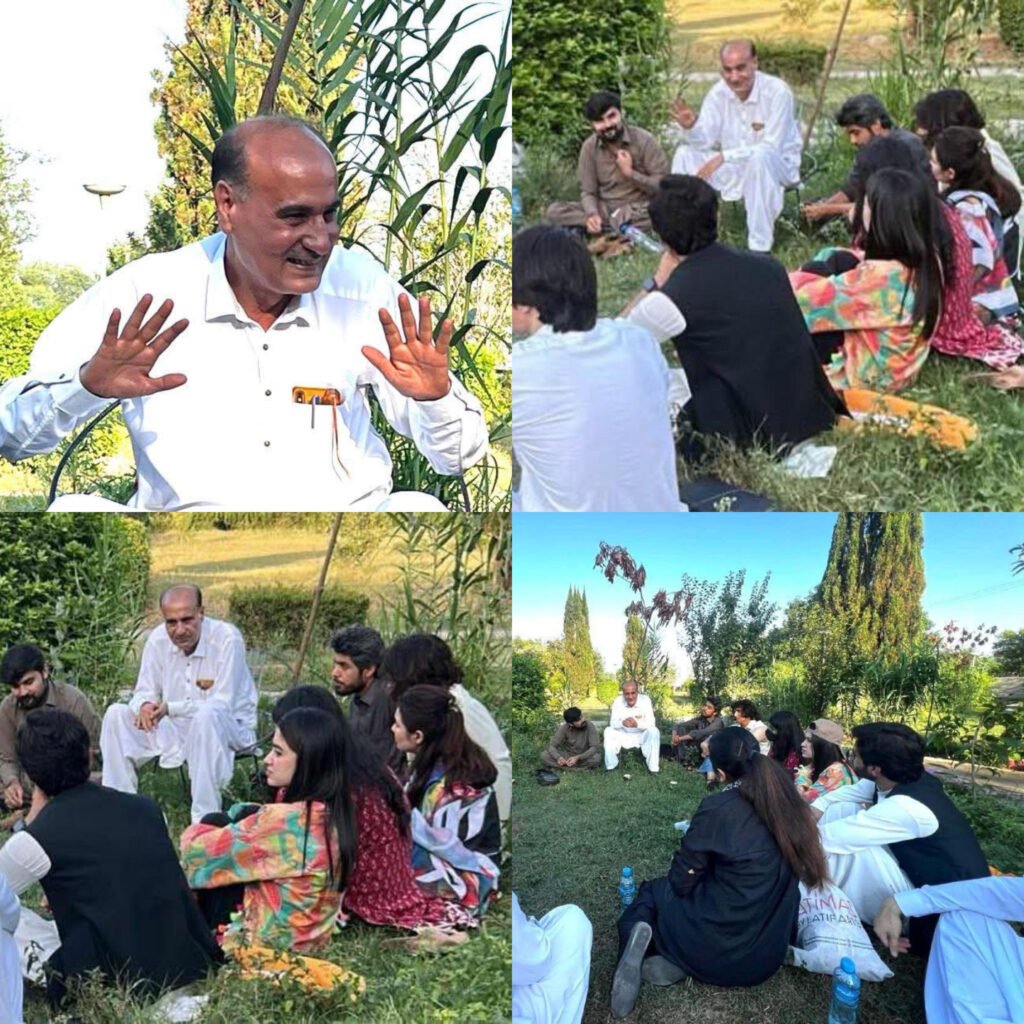
On Monday, June 22, 2026, Team SAAH RISE had the distinct honor of hosting a deeply enriching and thought-provoking study circle on “Building a More Pluralistic and Equitable Pakistan: Gender, Diversity and Democratic Reform.”
The session was graced by the esteemed Dr. Khadim Hussain a distinguished author, political analyst, researcher, consultant at the Centre for Research and Policy Dialogue (CRPD), Cultural Secretary of the Awami National Party (ANP), and former Professor at Quaid-i-Azam University. His insightful reflections inspired everyone present to envision a Pakistan where diversity is celebrated and every voice finds space to flourish.
Embracing the Beauty of Difference
Dr. Khadim Hussain opened rich conversations around ethnic, cultural, linguistic, and gender identities, emphasizing how these shape inclusive governance in Pakistan. He gently reminded us that “it is a right to be different” — a powerful message that challenged the notion of uniformity (“sab aik say hain”) and instead invited us to honor the rich tapestry of our society.
He spoke with compassion about the deep-rooted misogyny that often marginalizes women through everyday language and attitudes. Highlighting a concerning mindset still prevalent in some circles, he referenced comments that unfairly scrutinize women’s choices — from what they wear to when they step out. In contrast, he noted how many progressive societies have moved away from victim-blaming narratives, choosing instead to address issues with greater empathy and fairness.
Women: The Essential Half of Society
Drawing inspiration from the timeless wisdom of Bacha Khan, Dr. Hussain powerfully reiterated:
“A society without women is like a body that is half paralyzed.”
He highlighted how democracy remains incomplete when half the population’s voices are silenced or sidelined. The internalization of restrictive norms — even by women themselves — such as feeling the need to take a young child along when stepping out or facing resistance to women visiting the local bazaar in Pashtun society, reflects deeper structural challenges. Yet, he encouraged us to see these not as insurmountable barriers but as areas where conscious reform and cultural reawakening can bring meaningful change.
Lessons from History and Literature
The session beautifully wove together theory and lived experience. Dr. Hussain recommended essential readings for gender studies enthusiasts:
- The Second Sex by Simone de Beauvoir
- Can the Subaltern Speak? by Gayatri Spivak
- The Origin of the Family, Private Property and the State by Friedrich Engels
He also celebrated inspiring historical figures who championed women’s roles. From Bayazid Khan Ansari, who compiled the first formal Pashto book and raised the first women’s lashkar (force) from the lower classes, to the remarkable grassroots women leaders of Bacha Khan’s movement Sheen Bibi, Bibi Gul, and Bibi Jan whose powerful poetry continues to echo through time.
A Call for Genuine Inclusion
Dr. Khadim Hussain stressed the importance of accepting and celebrating provincial identities, including communities like the Saraiki people, and moving beyond centralized mindsets. True democracy, he affirmed, flourishes when every ethnicity, culture, and gender is given safe spaces, meaningful participation in governance (haq-e-hukmarni), and the right to own resources and make decisions.
He beautifully concluded that every person, irrespective of gender or ethnic background, is born with inherent dignity and the fundamental right to be different, to thrive, and to contribute fully to the nation’s progress.
Interactive and Inspiring
The study circle came alive with thoughtful questions from enthusiastic students, making the discussion even more dynamic and meaningful. The energy in the room reflected a shared commitment to building a Pakistan rooted in justice, pluralism, and equity.
At SAAH RISE, we believe that conversations like these are the seeds of real transformation. We extend our heartfelt gratitude to Dr. Khadim Hussain for sharing his wisdom so generously.
Let us all commit to creating a society where every woman, every culture, and every voice is not just tolerated but truly valued, empowered, and celebrated.
Together, we rise toward a more inclusive and harmonious Pakistan.
Stay connected with SAAH RISE for more inspiring sessions, dialogues, and initiatives working toward positive change.