
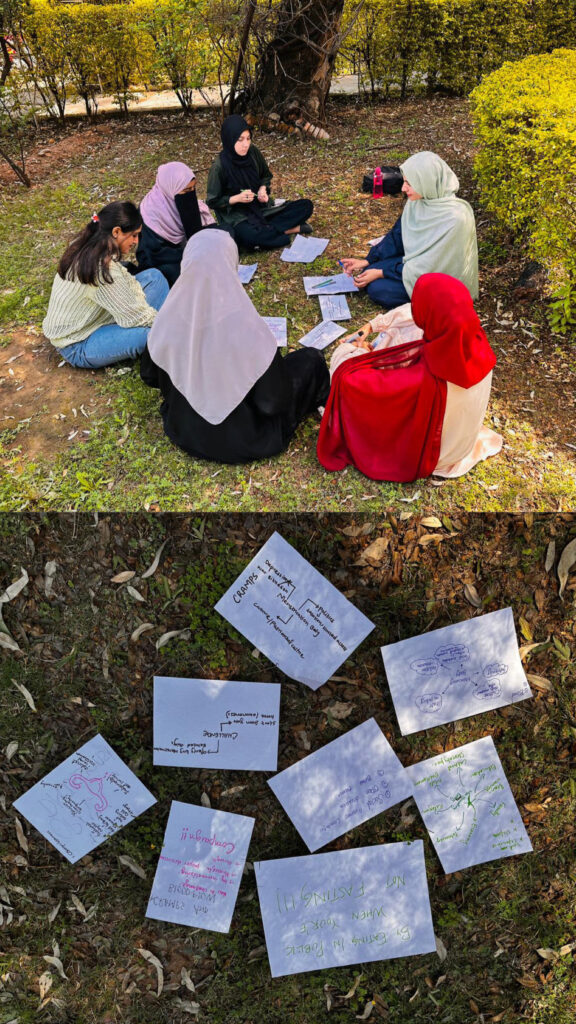
Team Saah Rise recently conducted another impactful session on Menstrual Health and Hygiene (MHH), creating a thoughtful and engaging space for dialogue, reflection, and awareness. The session was led by Syeda Sania Zahra, whose anthropological perspective brought depth and nuance to discussions surrounding menstrual health, stigma, and cultural practices.
Students from the Anthropology Department actively participated in the session, contributing meaningful insights and engaging in critical conversations about the social and cultural dimensions of menstruation. Through interactive discussions, participants explored how menstrual experiences are shaped not only by biology, but also by cultural norms, gender expectations, religious beliefs, and systems of inequality that influence everyday life.
Drawing from medical anthropology, the session examined menstruation as both a health and social issue. Discussions highlighted how silence, shame, and misinformation surrounding menstruation continue to affect access to education, healthcare, and dignity for many individuals. Participants also reflected on how menstrual taboos differ across communities and generations, emphasizing the importance of understanding local contexts when addressing menstrual health awareness.
The session encouraged students to critically engage with the ways in which society constructs narratives around menstruation and how these narratives impact mental, emotional, and physical well-being. By combining academic perspectives with lived experiences, the discussion created a space where participants could challenge misconceptions, share observations, and collectively rethink approaches to menstrual health education.
More importantly, the gathering reinforced the importance of safe and inclusive conversations in breaking long-standing taboos. It highlighted how informed dialogue can contribute to building empathetic, aware, and empowered communities that prioritize dignity and accessibility for all.