
This research is prepared by Muzmail Hussain, a 6th-semester student of Gender Studies,
INTRODUCTION:
Nawabshah, now officially known as Shaheed Benazirabad, is a city located in the Sindh province of Pakistan.
In rural Nawabshah, Sindh, girls face several barriers that stop them from attending school or completing their education. These barriers include religious misunderstandings, traditional cultural practices,
Week infrastructure,
weak state support, and poverty. Families often prefer boys’ education over girls’ education due to social norms and economic limitations. Many girls are also forced into early marriages or household responsibilities
PROBLEM STATEMENT:
Despite government efforts and awareness campaigns, girls in rural Nawabshah still face serious barriers to education. Many girls are unable to enroll in school, while others drop out before completing primary or secondary education.
Religious misconceptions, traditional gender roles, poverty, and weak state support collectively limit educational opportunities for girls.
OBJECTIVES:
* To examine the role of religion in shaping attitudes toward girls’ education.
* To analyze how traditions and cultural practices affect female education.
* To study the role of the state and educational policies.
* To evaluate the impact of poverty on girls’ educational opportunities.
. Week infrastructure
1.Religion and Girls’ Education
Islam encourages education for both men and women. However, in some rural communities, religious teachings are misunderstood or interpreted in ways that restrict girls’ mobility and education. Some families believe girls should remain within the home, which limits their access to schools.
Families prefer sending children only to madrassas because they think religious education is more important than formal education. While madrassas provide religious learning, many do not offer complete modern subjects such as science, mathematics, and technology. As a result, girls may have limited opportunities for higher education and employment in the future.
Tradition and Cultural Practices
Traditional gender roles strongly influence girls’ education in rural Sindh. Girls are often expected to perform household work, care for younger siblings, and prepare for marriage instead of focusing on education.
Early marriage is another major issue. Many girls leave school after puberty because families fear social criticism or believe higher education is unnecessary for girls.
State and Educational Policies
The government of Pakistan has introduced several policies to increase literacy and promote girls’ education. However, rural areas still face problems such as
Lack of schools
Poor school infrastructure
Shortage of female teachers
Absence of transportation
Weak monitoring systems
Poverty and Economic Barriers
Poverty is one of the biggest barriers to education. Poor families often cannot afford school expenses such as uniforms, books, transportation, and fees. Many girls are also involved in domestic labor or agricultural work to support their families.
As a result, education becomes a lower priority for economically disadvantaged households.Barriers to Girls’ Education
Poverty 32%
Traditional Practices 24%
State Failures 32%
Religious Misunderstanding 12%
School Dropout
Early Marriage 25%
Household Work 30%
Financial Problems 35%
Lack of Schools 10%
POOR INFRASTRUCTURE
.Lack of School Buildings
Many villages do not have proper schools for girls. Some schools are far away from homes, making it difficult and unsafe for girls to travel daily. Parents often refuse to send daughters to distant schools because of safety concerns.
.Poor Classroom Conditions
Several rural schools have broken buildings, damaged furniture, and overcrowded classrooms. Some schools do not even have electricity, fans, or clean drinking water. Such conditions create an uncomfortable learning environment for girls.
.Lack of Toilets and Hygiene Facilities
One major issue is the absence of separate toilets for girls. This becomes a serious problem, especially for teenage girls. Because of poor sanitation and hygiene facilities, many girls leave school after puberty.
. Shortage of Female Teachers
Parents in rural communities often prefer female teachers for girls’ education. However, many schools in Nawabshah face a shortage of trained female teachers. Due to this, families hesitate to send girls to school.
LITERATURE REVIEW
studies show that girls in rural areas face difficulties in getting education. One big problem is weak school infrastructure. Many schools do not have proper classrooms, electricity, clean water, or separate toilets for girls. Because of this, parents do not feel comfortable sending their daughters to school.
Another problem is the role of the state. In many rural areas, schools do not get enough support from the government. There are fewer female teachers, poor transport facilities, and weak monitoring systems. This affects the quality of education for girls.
Traditional norms are also a major barrier. In some families, boys’ education is seen as more important than girls’ education. Girls are often expected to do housework or get married at a young age instead of continuing school.
Findings of the Research
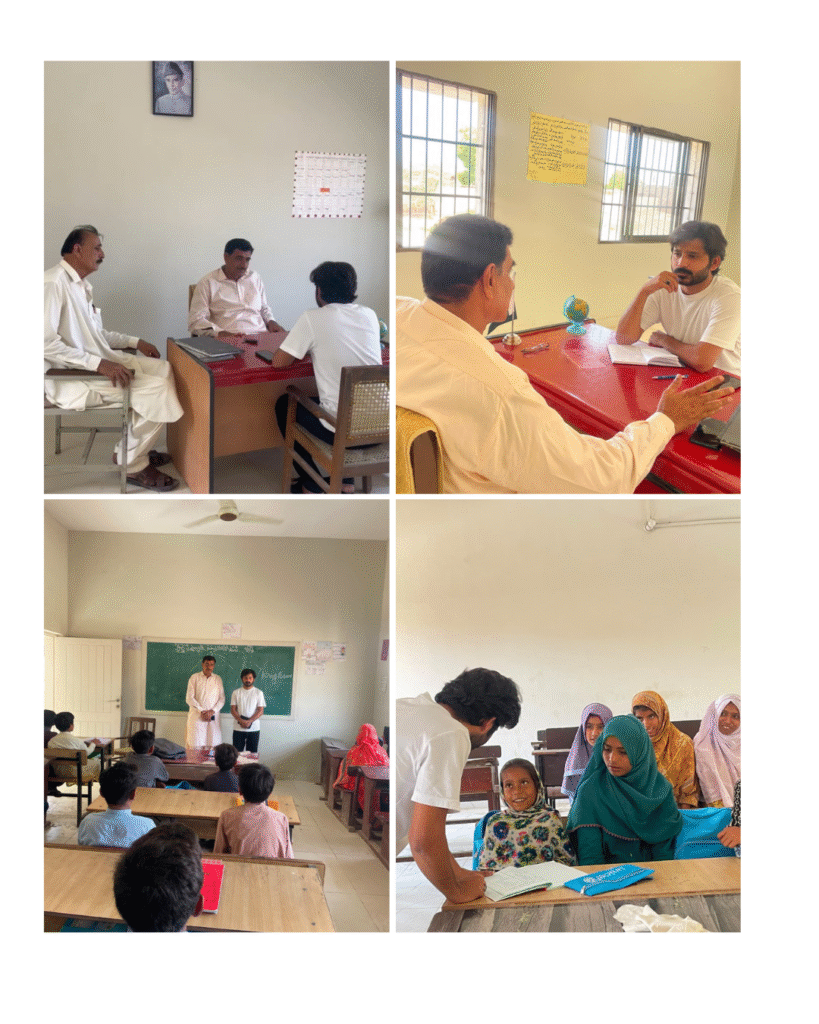
The research on barriers to girls’ education in rural Nawabshah found that many girls face difficulties in continuing their education because of poor infrastructure, weak government support, traditional norms, poverty, and religious extremism. During the research, interviews were conducted with headmasters and other teaching staff. Most of them said that the biggest problem is poor infrastructure. They explained that many schools do not have proper electricity, clean classrooms, or separate washrooms for girls. These poor conditions create an uncomfortable and unsafe learning environment for female students.
The teachers also explained that poverty is another major barrier. Many families are financially weak and cannot even afford basic educational items such as books, notebooks, or pens. Some parents prefer sending their children to work as laborers because they need money for daily household expenses. Since their financial condition is not stable, education becomes less important for them.
Regarding religion, many teachers shared that a large number of families prefer sending girls to madrassas or religious centers for Hifz education because they believe religious education is more important and safer for girls than formal schooling. Due to this thinking, many girls do not continue modern education. The research concludes that improving school infrastructure, providing financial support, and creating awareness about the importance of girls’ education are necessary steps to improve educational opportunities for girls in rural areas.
Recommendations
Based on the research on barriers to girls’ education in rural Nawabshah, several important steps are recommended to improve the situation. First, the government should increase the education budget so that more resources can be provided to schools. Just like other sectors such as defense and infrastructure receive priority, education should also be given equal or higher importance because it is the foundation of national development. Increased funding can help improve school buildings, facilities, and learning materials.
Second, there should be equal quality of education across all provinces. A uniform education system should be introduced so that all students in Pakistan study under the same standard curriculum and receive equal learning opportunities. This will reduce inequality between rural and urban areas and between different provinces.
Third, school infrastructure should be improved by providing proper classrooms, electricity, clean drinking water, and separate washrooms for girls. More female teachers should also be appointed in rural schools because parents feel more comfortable sending girls where female staff is available.
Fourth, financial support should be given to poor families in the form of free books, uniforms, and scholarships so that poverty does not stop girls from studying. Awareness campaigns should also be introduced to change traditional thinking and highlight the importance of girls’ education. Safe transport facilities should also be provided in rural areas to improve girls’ access to schools.
Conclusion
In conclusion, this research shows that girls in rural Nawabshah face multiple barriers to education, including poor infrastructure, poverty, weak government support, traditional cultural beliefs, and religious misunderstandings. These issues are strongly connected and prevent many girls from continuing or completing their education.
The study also highlights that improving education requires strong government commitment, especially by increasing the education budget and ensuring equal education standards across all provinces. If education is given the same priority as other national sectors and if equal opportunities are provided to all students, girls’ education in rural areas can significantly improve. Ultimately, better education policies, improved school conditions, and social awareness can help empower girls and contribute to the development of society.