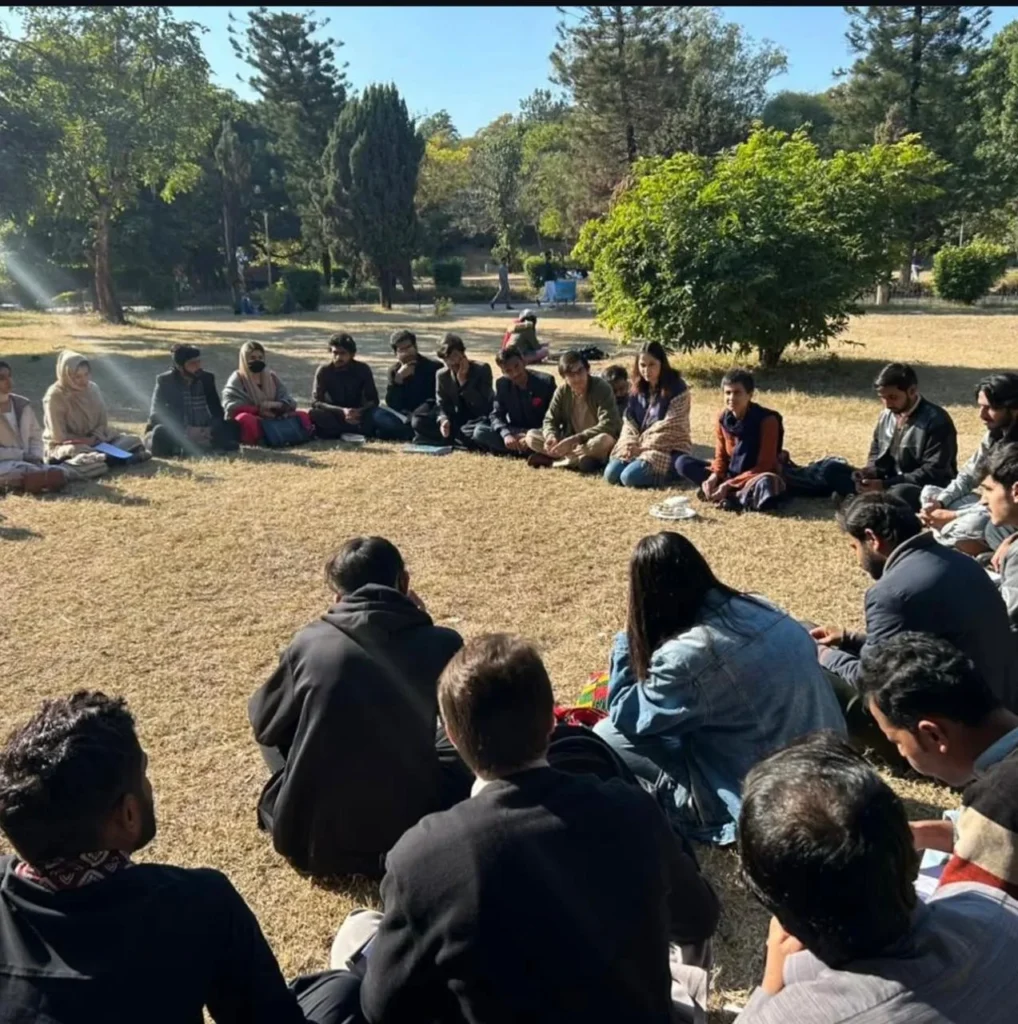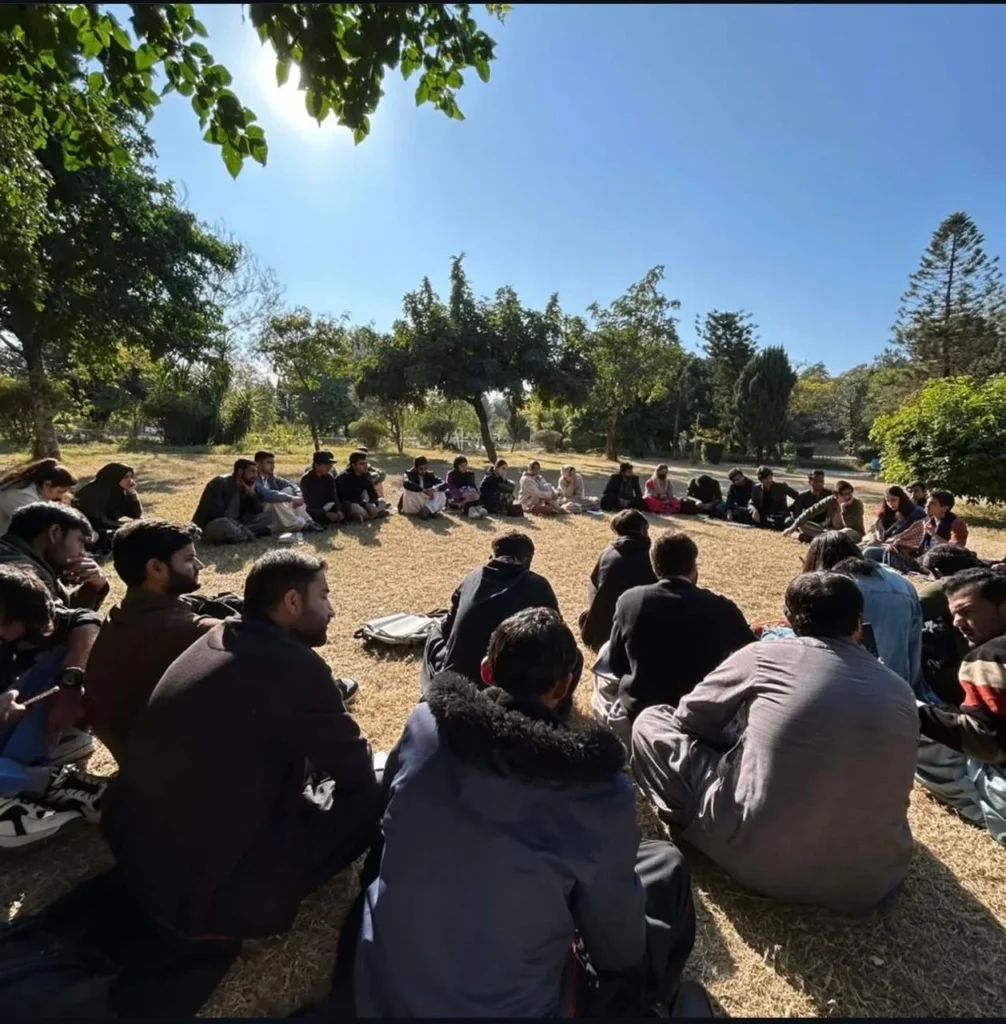
Student politics has always been at the heart of social and political transformation both globally and in Pakistan. But today, our campuses stand silent. The once vibrant voices of student movements have been reduced to echoes of the past. The question is: how can we bring students back into political engagement not just to resist, but to reform and rebuild the very systems that have oppressed them?
In every era, students have been the architects of change. They are fearless, with nothing to lose and everything to question. From anti-colonial movements to struggles against dictatorship, student organizations around the world have challenged power structures, demanded justice, and reshaped their societies. Yet in Pakistan, this spirit has faded. Our student politics once alive, dynamic, and inclusive has become fragile, fragmented, and often silenced.
There was a time when student unions were an integral part of the decision-making process in universities. Representatives of students sat in syndicates the highest governing bodies of universities where they had the power to raise concerns, question policies, and represent their fellow students. Their presence ensured accountability and inclusivity in university affairs. But after the ban on student unions during the dictatorship, this democratic space was snatched away. Today, the syndicate seats once reserved for elected student representatives are often filled by those favored by teachers or administration. The result is a hollow representation decisions about students are made without students. The very people most affected by campus policies have been systematically excluded from shaping them.
As Dr. Alia Amirali shared in her talk at Quaid-i-Azam University, even small acts of student activism can spark great change. During General Musharraf’s regime, when political engagement seemed impossible, she and a few students stood up in protest. Only two or three joined on the first day, but their courage inspired others — and by the final day, more than 800 students wearing black bands came together. Their unity became a statement: resistance begins with belief.
But revival isn’t just about resistance; it’s about reimagining. We must ask deeper questions Marxist questions about who gets to participate in politics. Who has access to representation, and whose voices are left out? The student from LUMS or QAU experiences privilege differently from a student in Balochistan fighting for identity and recognition. When we talk about tulba siyasat (student politics), we must talk about all students, across class, region, and status. Politics cannot remain the playground of elites it must belong to the people, especially the youth.
Student politics in Pakistan today is not dead, but it is wounded. The National Students Federation (NSF), once a powerful progressive force in the 1960s, is barely remembered now. It was never a traditional elite organization it was built on ideology, collective struggle, and dreams of equality. Today, our challenge is to rebuild that spirit to organize, question, and dream again.
Because without students in politics, there can be no future politics.
Because change has always begun in classrooms, not parliaments.