
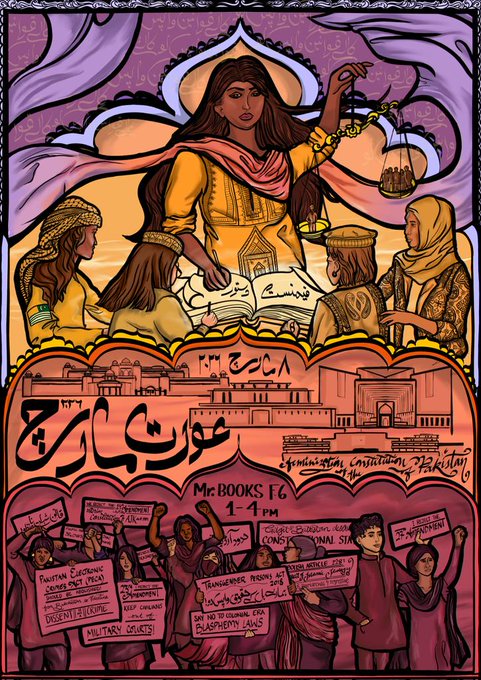
International Women’s Day is globally recognized as a day to celebrate women’s achievements, leadership, and contributions to society. It is also a day to reflect on the ongoing struggles for gender equality and justice. However, this year’s observance was overshadowed by a troubling incident when renowned women’s rights activist Farzana Bari, widely known as the Iron Lady, along with other organisers of Aurat March, was arrested during a peaceful demonstration.
The arrest of such a prominent women’s rights leader on a day meant to honour women’s voices has raised serious concerns among activists, students, and civil society members. According to participants present at the scene, women protesters were reportedly treated harshly and pushed into police vehicles in a manner many described as aggressive and disrespectful. The situation created fear and anxiety among those who had gathered simply to advocate for women’s rights and gender equality.
Adding to the tension, students from different universities who intended to participate in the march were stopped from reaching the protest site due to alleged security concerns. While safety is an important consideration in any public gathering, restricting peaceful civic participation raises critical questions about the shrinking space for democratic engagement and freedom of expression.
Peaceful protest is not merely a privilege; it is a fundamental right of every citizen in a democratic society. Throughout history, social movements around the world have relied on peaceful demonstrations to challenge injustice and demand accountability. In Pakistan as well, women’s movements and civil society organisations have used peaceful advocacy to highlight issues such as gender-based violence, workplace discrimination, lack of representation, and unequal access to opportunities.
The Aurat March has emerged as one of the most significant feminist movements in the country, providing a platform for women, gender minorities, and allies to speak openly about their lived experiences and the systemic barriers they face. Over the years, the march has also sparked important national conversations about gender equality, bodily autonomy, economic rights, and social justice.
Women and gender minorities in Pakistan continue to face marginalisation in multiple spheres of life, including education, employment, political participation, and access to justice. Activists like Dr. Farzana Bari have spent decades advocating for women’s empowerment and democratic rights. Her work has inspired countless young activists, students, and civil society members to raise their voices against inequality and injustice.
When leaders who have dedicated their lives to promoting social justice are treated in such a manner, it sends a discouraging message to those who believe in peaceful advocacy and democratic engagement. Instead of silencing voices calling for equality, societies must create safe and inclusive spaces where citizens—especially marginalised groups—can express their concerns and participate in shaping a more equitable future.
International Women’s Day should serve as a reminder that the struggle for gender equality is far from over. Incidents like these highlight the challenges women activists continue to face when demanding their fundamental rights.
Team Saah Rise stands in solidarity with all women’s rights defenders, students, and activists who continue to advocate for justice, equality, and dignity. Respecting the right to peaceful protest and protecting those who raise their voices for human rights is essential for building a democratic, inclusive, and just society.
The path toward equality requires courage, dialogue, and collective action. Silencing women’s voices will never erase the issues they raise—it only strengthens the urgency of addressing them.